Micro-Cheating: The Small Relationship Sins That Can Grow into Full-Blown Affairs
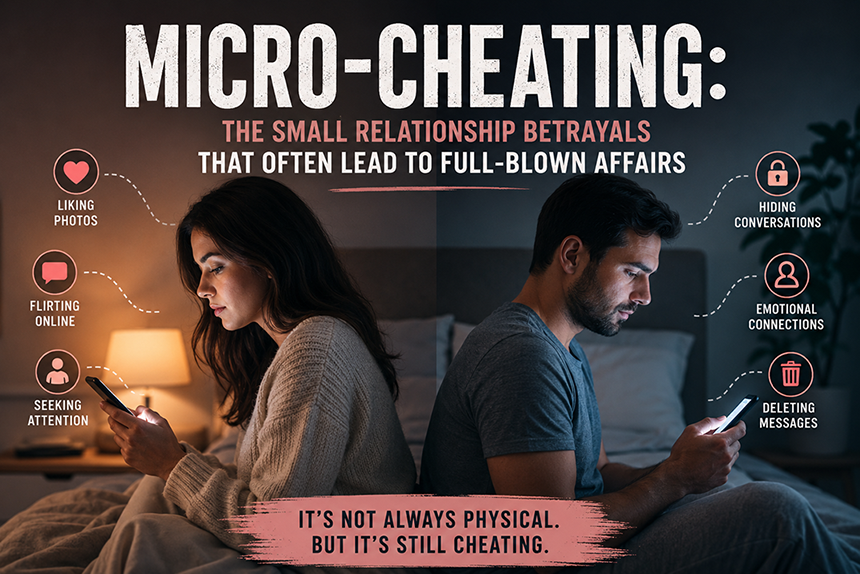
In the modern digital age, infidelity is not just about secret hotel trysts, hidden phone lines, or physical affairs. The tech revolution has created a whole new domain of relational behavior that many find hard to name. This is called micro-cheating, and even without physical intimacy, it can be deeply destructive to mutual trust.
Some couples may see liking sexy photos of people on social media as harmless. For others, it may cross a serious line to receive private messages, develop emotional connections, or flirt online. The problem with micro-cheating is that it often exists in a gray area, where intentions, perceptions and relationship boundaries don’t always line up.
It’s rarely one big betrayal that ends most relationships. And they rot and die through a myriad of small acts of secrecy that slowly erode trust. What begins as a friendly chat can turn into emotional dependency. An innocent interaction can become a secret relationship. And before you know it, the bottom falls out of the relationship and both partners are left wondering what happened.
In today’s world, knowing what micro-cheating is, why it happens and how to prevent it is imperative for anyone who is dating and in relationships.
What is Micro Cheating?
Micro-cheating is behavior that might not normally be considered physical cheating but does cross emotional boundaries in a committed relationship.
Micro-cheating is less obvious than cheating, but it’s usually little things that seem innocuous when they’re isolated. But when those things become clandestine, emotionally intense or habitual, they can cause big problems.
Micro-cheating can be things like:
- Flirting on social media
- Having private conversations with people other than your partner
- Staying in touch with an ex for emotional reasons
- Getting validation from people you're attracted to
- Liking or commenting on someone's pictures regularly in a flirtatious way
- Having an active dating profile while in a relationship
- Sharing personal feelings with someone outside the relationship you wouldn't share with your partner
The common denominator of micro-cheating is often secrecy. If you feel the need to hide an interaction from your partner, there’s a good chance you’ve crossed a line.
Why micro-cheating is more prevalent than ever
The advent of smartphones and social media have transformed the dating scene.
It used to be a lot of work to stay in touch with exes or old flames. Now you can find people in seconds with a simple search. Social media sites, messaging apps and online communities have made communication reach its maximum.
The problem isn't technology itself. The problem is that technology creates constant opportunities for emotional connections outside the primary relationship.
Many people don't intentionally seek an affair. They simply enjoy the excitement that comes from attention, compliments, and validation.
That excitement can be addictive.
A private message turns into a daily conversation. Daily conversations become emotional support. Emotional support becomes emotional attachment.
That slow burn is what makes micro-cheating so dangerous.
The Psychology of Micro-Cheating
One reason micro-cheating is so common is because it often meets emotional needs.
We are human beings and we have a natural desire for attention, validation, connection. When we don’t get it all some people go out looking for it.
That doesn’t mean they’re unhappy in their relationship, though.
In fact, many people who engage in micro-cheating describe themselves as being in happy relationships.
What they often seek is novelty.
A new interaction can give a temporary lift to self-esteem and create feelings of desirability.
Some common reasons why people do this are:
- Validation
- Boredom
- Curiosity
- Loneliness
- Low self-esteem
- Thrill-seeking
- Escaping from the stresses of daily life
Unfortunately, what starts as harmless validation can quickly become something much deeper.
10 Micro-Cheating Behaviors Most People Don’t Realize They’re Doing
1. Texting Someone You’re Attracted To All The Time
Even if the conversations are completely platonic, daily communication can build emotional intimacy.
2. Hidden Messages
Deleting messages or hiding notifications shows you know your partner might not approve of it.
3. Online Flirting
A lot of people discount online flirting because it’s not physical. But emotional boundaries still count.
4. Keeping your dating profiles active
Keeping your dating profiles active is a good way to show that you are still interested in meeting new people.
5. Seeking Comfort Outside of the Relationship
If you’re beginning to seek comfort from someone else, you might be falling into emotional cheating.
6. Comparing Your Partner To Someone Else
Emotional attachments often start when someone starts to idealize someone else.
7. Talking about Yourself
Sharing secrets can create intimacy, even without touches.
8. Sneaking Around With An Ex
Not all ex-friendships are toxic, but hiding it is a warning sign.
9. Fishing for compliments.
If you’re sharing content online for the purpose of getting validation from a specific person, that’s a sign of unhealthy motivations.
10. Fantasying About a Particular Person
Having an emotional investment in someone outside the relationship, again and again, can become an issue as time goes on.
Micro-Cheating vs Emotional Cheating
There are key differences between micro-cheating and emotional cheating that many people get confused.
Micro-cheating often encompasses behaviors that create opportunities for emotional bonds.
Emotional cheating is when that connection has been made already.
Micro-cheating:
- Flirting
- Secret communications
- Seeking attention
Emotional Infidelity:
- Deep emotional connection
- Dependency on another person
- Prioritizing someone else over your partner
Micro-cheating is like the first level that can lead to emotional infidelity.
Micro-Cheating and Social Media - How Social Media Feeds Micro-Cheating
Social media is built on engagement.
Likes, comments, reactions, and direct messages provide instant feedback and validation.
Many forms of micro-cheating now occur through:
- Snapchat
- TikTok
- Messaging apps
A person may begin following someone out of curiosity. Soon they're checking stories every day. Then they begin messaging privately.
What feels harmless initially can gradually become emotionally significant.
Social media relationships tend to feel casual and so people often underestimate the impact they have on relationships.
Real Life Examples of Micro-Cheating
Check out these typical situations:
A married man flirts with a colleague via daily texts but claims that there was no physical interaction.
A woman has an affair with a former boyfriend and discusses relationship troubles with him.
If you’re in a committed relationship, you’ll have a variety of dating app profiles just to see who’s interested.
A partner is spending more time talking to an online friend than they are with their significant other.
In none of these scenarios is there any physical intimacy but most would agree that trust has been broken.
Why Micro-Cheating Hurts So Much
Many people are surprised by how painful micro-cheating can be.
The reason is simple.
Trust is more than just a physical behavior.
“Trust is built on honesty, transparency and respect.
If they find secret conversations, secret emotional attachments or dishonest acts, they start to doubt the whole relationship.
Questions come fast: What else is being hidden?
How long has this been happening?
Can I trust anything I'm being told?
These doubts can be incredibly difficult to overcome.
How to Talk About Relationship Boundaries
One of the biggest mistakes couples make is assuming they share the same definition of cheating.
In reality, every relationship is different.
Some couples are comfortable with flirtation.
Others see it as totally unacceptable.
Honest discussions about expectations are needed in healthy relationships.
Some of the main topics: Communication with exes Social media behavior Online friendships Dating apps Private messaging Emotional boundaries The sooner you have these chats, the easier it will be to avoid misunderstanding.
Can Your Relationship Survive Micro-Cheating?
Often the answer is yes.
Micro-cheating, unlike many physical affairs, can often be dealt with before it causes irreparable damage.
Recovery often includes: Honesty Accountability Transparency Ongoing communication Building trust over time The partner who violated the boundary must take responsibility for the effect of their actions.
The injured partner needs to feel heard and respected.
Trust doesn't come back overnight, but many couples are stronger after talking through these things openly.
What Modern Dating Can Teach Us About Boundaries
The world of dating today offers more opportunities for connection than ever before.
Want to browse members in your area? Looking for New York singles?
Or just browsing local singles? Technology has made it easier and faster to meet people.
At the same time, these opportunities call on us to be more conscious and to create stronger boundaries.
Tools that help people find meaningful relationships can be seductive if used the wrong way.
Great relationships aren’t about avoiding tech. They’re about respect & trust & communication.
Final thoughts
Micro-cheating may not be as serious as a full-blown affair but the consequences should always be taken seriously. Small acts of secrecy, emotional reliance, and hidden validation can slowly eat away at even the strongest of relationships.
The challenge isn’t just to stop physical infidelity. It’s about the little behaviors that create distance between partners long before an affair ever occurs.”
Couples can protect the trust that is the foundation of a healthy, long-lasting relationship by recognizing warning signs, discussing boundaries and emphasizing honesty.
Loyalty isn’t just a physical thing. It’s a daily practice of being honest, being honorable, being true to your word, being honorable when nobody is looking.